 SportShooting
Air Pistol Training Log: Track Scores, Groups and Progress
In competitive target shooting, the difference between a podium finish and a mid-pack result often comes down to performance understanding. For serious shooters, an air pistol training log is more than a record of scores; it is a diagnostic tool and a roadmap for improvement. Whether you are a beginner tightening your groups or an experienced marksman aiming for national qualification, mastering documentation is the first step toward technical excellence.
Introduction: Why Documentation is the Key to Mastery
Many shooters focus solely on their final score. They celebrate a 95-point series and lament an 87, but without context, these numbers are noise. True mastery comes from identifying patterns over time. By maintaining a detailed shooting logbook app, you shift your focus from the result to the process.
Systematic documentation allows you to isolate variables affecting your performance. Is your group shifting as you fatigue? Does range lighting cause you to alter your sight alignment? Does your first series suffer from jitters? A digital shooting logbook turns these hunches into actionable data points to track shooting progress with clinical precision.
Air Pistol or Small Bore? Precision is Universal
While equipment and distances vary, the principles of precision shooting remain consistent. Whether you are focused on 10m Air Pistol, 25m Sport Pistol, or 50m Free Pistol, the core challenges—trigger control, sight alignment, and mental focus—are universal.
The 10m air pistol is the "purest" form of shooting because it is incredibly unforgiving. Low projectile velocity means even slight follow-through errors are magnified. This makes the air pistol training log an essential tool for all pistol shooters. Lessons learned in 10m training translate directly to 25m and 50m disciplines. Precision is a habit, and documentation is how you build it.
Essential Data for Your Shooting Logbook
A high-quality shooting logbook app should capture the context surrounding every shot. Essential data points to track include:
- Temporal and Spatial Data: Date, time, and location. Your internal clock and the range environment impact focus.
- Environmental Conditions: Note lighting for indoor 10m shooting, and temperature or wind for outdoor sessions.
- Mental and Physical State: Record fatigue levels, stress, and your "mental zero."
- Technical Notes: Ammunition batch (lot number), trigger adjustments, and sight clicks made during the session.
Recording these details creates a comprehensive "snapshot" of each session, helping you develop strategies to mitigate external factors during competitions.
Advanced Shot Group Analysis: What Your Target Tells You
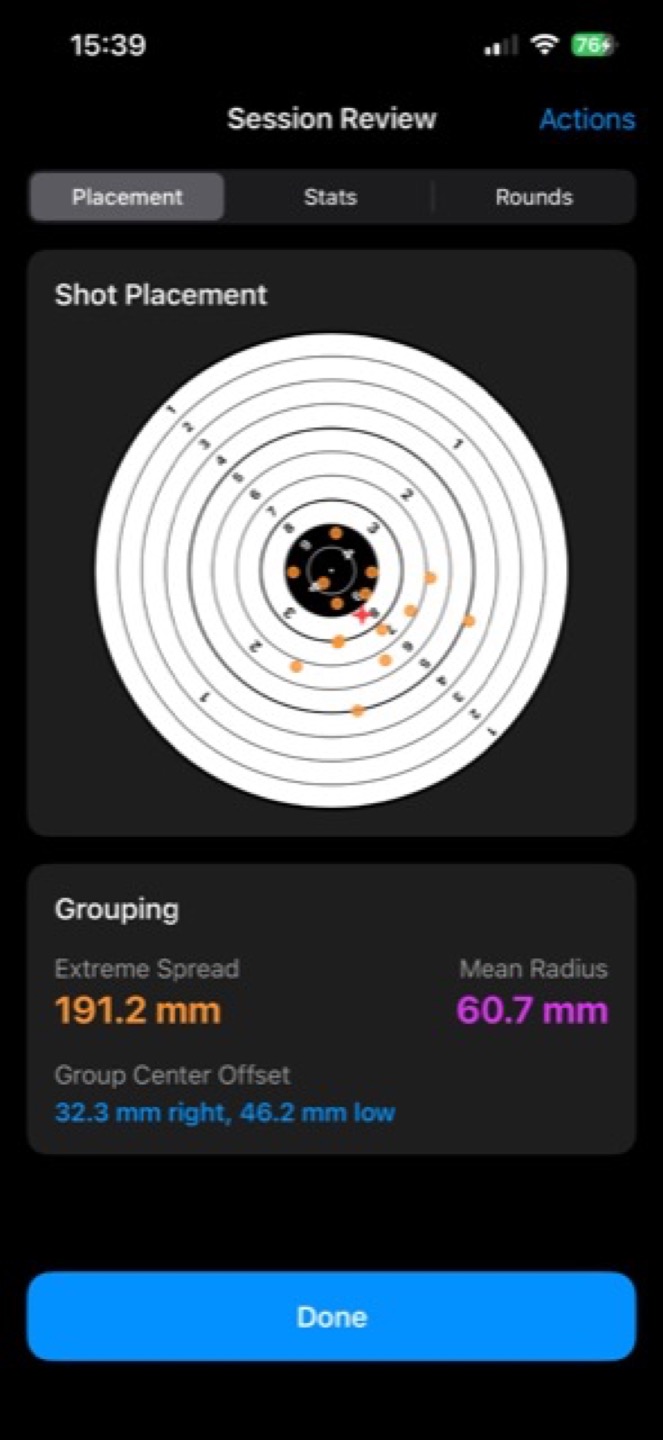
The core of your documentation is shot group analysis. A group of shots on a target is far more than a collection of points; it is a diagnostic report of your technical execution during that specific session. To improve, you must learn to distinguish between systematic errors—flaws in your setup or technique—and random spread, which is the inherent variability of any mechanical system.
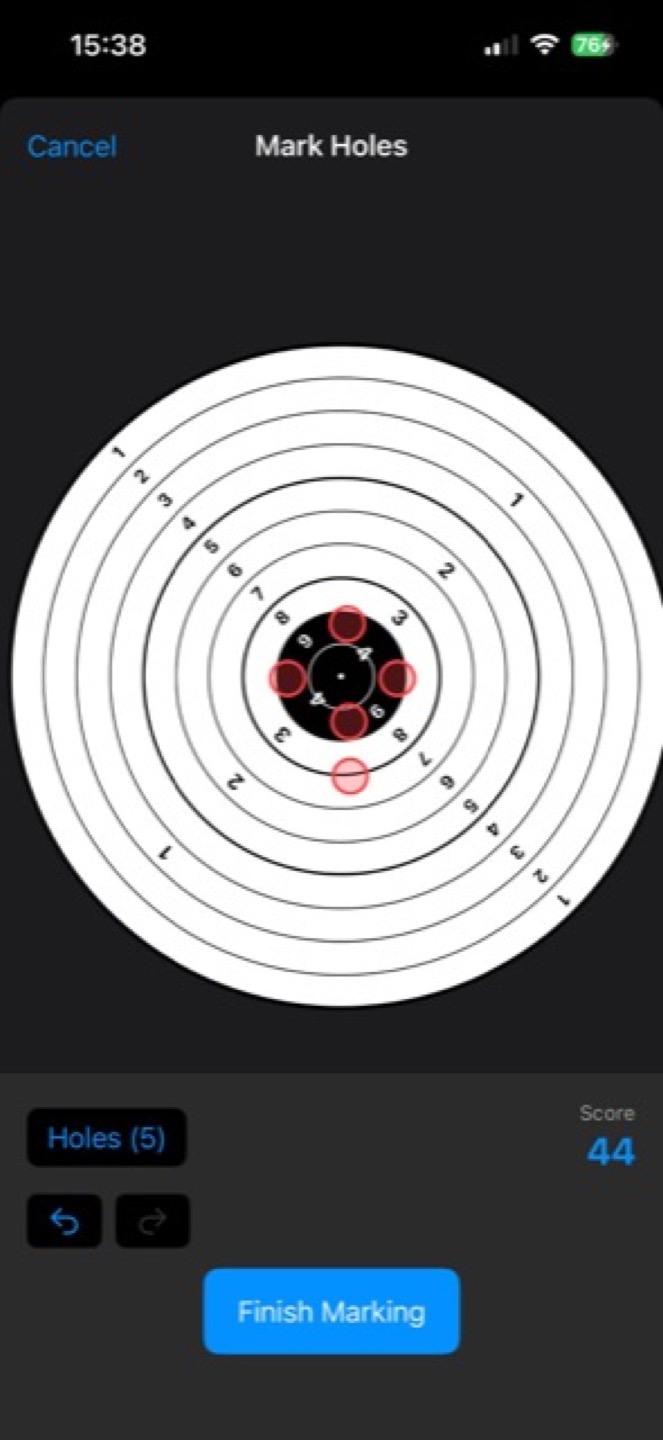
Systematic errors usually manifest as shifts in the group center or specific geometric patterns. For example, a group that is consistently shifted low and to the left (for a right-handed shooter) might indicate "trigger jerk"—the tendency to pull the trigger too abruptly, disturbing the alignment just before the shot breaks. "Vertical stringing," where shots are spread out in a vertical line, often signals inconsistent breathing or a fluctuating grip pressure that changes the pistol's elevation.
"Horizontal stringing" can indicate issues with lateral trigger finger placement or eye fatigue, leading to a breakdown in sight alignment. "Dipping"—where a shot lands significantly lower than the main group—is frequently caused by "anticipating" the recoil or re-gripping the pistol just as the sear releases. By using a digital shooting logbook to review your target photos, you can visually identify these recurring patterns and correlate them with your technical notes, transforming a standard practice session into a high-level coaching moment.
Key Metrics Every Shooter Should Track
While the total score is the primary metric used in competition, it can often misrepresent technical progress during training. A lucky "10" is still a 10, but it might have been a poorly executed shot. Conversely, a perfect 9.9 is a "9" in many formats but represents excellent technique. To accurately track shooting progress, you should monitor these four key metrics:
- Total Score: The primary competitive metric. It is useful for tracking your "floor" and "ceiling" performance levels over months of training.
- Extreme Spread (ES): The maximum distance between the centers of the two shots furthest apart in a group. This measures your worst-case variability and helps you understand the boundaries of your current precision.
- Mean Radius (MR): The average distance of all shots from the center of the group. MR is the gold standard for measuring consistency because it is less influenced by a single "flyer" than Extreme Spread is. It gives a more stable picture of your overall technical quality.
- Group Center: The mathematical average position of all shots relative to the bullseye. Tracking the movement of the group center across multiple sessions is essential for verifying your mechanical zero and ensuring your natural point of aim is correctly aligned.
The Digital Advantage: Visual History
A digital shooting logbook offers the ability to store high-resolution photos of every target—a massive advantage over handwritten notes.
A target photo preserves details numbers cannot. You see the group shape and subtle relationships between series. Digital tools allow side-by-side comparison, letting you overlay today's session with one from months ago to see if technical flaws like "vertical stringing" have improved. This visual history provides objective feedback vital for motivation and long-term development.
Optimizing Your Workflow with SportShooting
The biggest barrier to maintaining an air pistol training log is the effort required. SportShooting was designed for a frictionless workflow: Shoot -> Photograph -> Analyze -> Archive.
- Finish your series on the paper target.
- Use the SportShooting app to take a photo.
- Mark the holes on the screen; the app handles the shot group analysis instantly.
- Save the session to your history for later review.
SportShooting prioritizes privacy. Your photos and data stay on your iPhone—no cloud, no accounts, and no tracking. It is a private, professional tool built for the dedicated marksman.
Conclusion
Competitive shooting requires seeing each session as part of a larger data set. By using a digital shooting logbook to maintain a consistent air pistol training log, you gain the insights needed for technical corrections.
Don't just count points—analyze your groups. Document your worst days to understand why they happened. With the right data and a commitment to improvement, progress becomes a matter of design rather than luck. Start turning your target photos into a roadmap for mastery with SportShooting.