 SportShooting
10m Air Pistol
10m Air Pistol Scoring: Ring Sizes, Gauging and What a Good Score Is
A 10m air pistol target has ten rings, only a few millimetres apart. Knowing the exact ring sizes and the gauging rule makes hand scoring consistent. Knowing what a score means in millimetres tells you where you stand, from first-month beginner to Olympic final.
An Olympic discipline
10m air pistol is one of the most-shot pistol events in the world and one of the shooting events on the Olympic programme. Men and women compete in separate events, and since Tokyo 2020 there is also a mixed team event. The Paris 2024 competition took place in Châteauroux, and the men's and women's 10m events remain on the programme for Los Angeles 2028.
The format is the same at club and Olympic level, which makes it easy to compare yourself to the best. You fire 60 shots in 75 minutes, preceded by 15 minutes of preparation and sighting shots. The eight best shooters advance to a final of 24 shots, which is scored in tenths. Qualification is scored in whole rings, with the inner ten used to break ties.
The ISSF 10m air pistol target
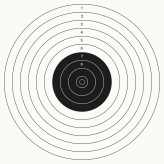
The face has ten scoring rings. The 10 ring is 11.5 mm in diameter, and every ring outward is 8 mm larger in radius (16 mm in diameter). The black aiming area is 59.5 mm across and covers rings 7 to 10. The numbers 1 to 8 are printed on the face; 9 and 10 are not. A small inner-ten circle (5 mm) is printed in the centre. SportShooting draws it, but treats every hit inside the 10 ring as a 10.
The pellet: what makes the hole
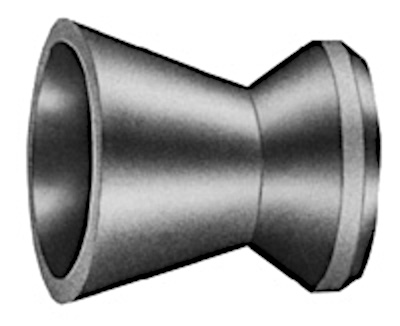
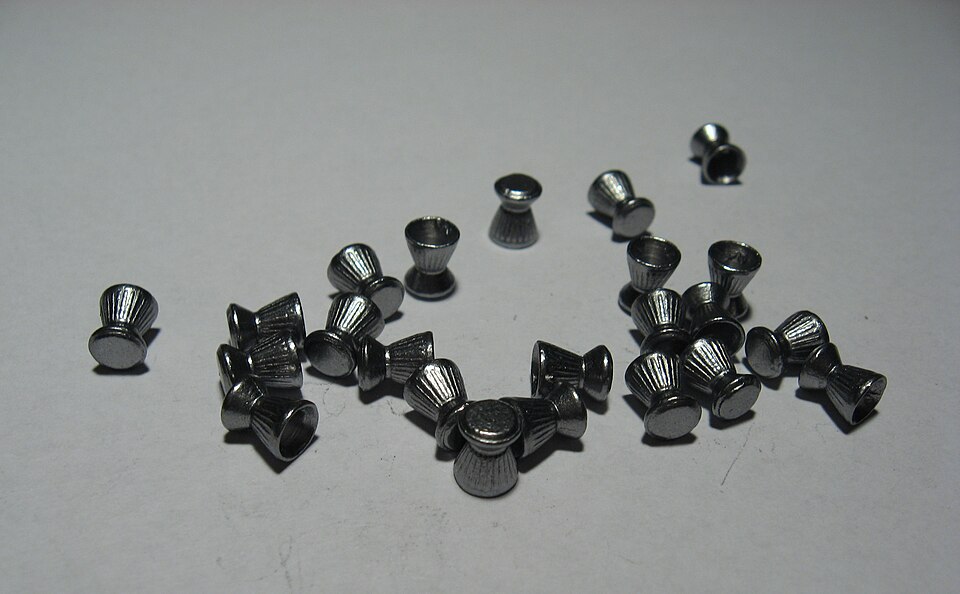
10m air pistols fire a 4.5 mm (.177 calibre) diabolo pellet, a small lead pellet shaped like an hourglass with a hollow skirt. Match pellets have a flat head, called a wadcutter, which punches a clean round hole in the paper. That clean hole is why a 4.5 mm gauge, and the gauging rule below, work so well. Pointed and domed pellets for plinking and hunting leave a less regular hole and are not what competitors shoot.
The gauging rule: when the line counts
A shot scores the higher ring if the edge of the hole touches the ring line. A 4.5 mm pellet hole therefore reaches 2.25 mm further than its centre. Take a hole whose centre is 7.9 mm from the middle of the target. The 10 ring has a radius of 5.75 mm, but the hole edge sits at 7.9 − 2.25 = 5.65 mm, so it still scores a 10.
This is the part most often done differently by eye. When you mark shots in SportShooting, the same rule is applied for you using a 4.5 mm hole, so close calls are consistent.
Ring sizes at a glance
| Ring | 10 | 9 | 8 | 7 | 6 | 5 | 4 | 3 | 2 | 1 |
|---|---|---|---|---|---|---|---|---|---|---|
| Diameter mm | 11.5 | 27.5 | 43.5 | 59.5 | 75.5 | 91.5 | 107.5 | 123.5 | 139.5 | 155.5 |
| Diameter inches | 0.45 | 1.08 | 1.71 | 2.34 | 2.97 | 3.60 | 4.23 | 4.86 | 5.49 | 6.12 |
| Radius mm | 5.75 | 13.75 | 21.75 | 29.75 | 37.75 | 45.75 | 53.75 | 61.75 | 69.75 | 77.75 |
ISSF dimensions are metric, so the tables on this page use millimetres. For US shooters, the 10 ring is 0.45 in, the black is 2.34 in and the whole face is 6.12 in across. Air pistol is shot at 10 m (about 10.9 yards) in every country, so only the paper sizes need converting. US NRA pistol targets use inches and yards, see the 25m and 50m pistol guide for the NRA B-8.
What the numbers mean in millimetres
Because the hole radius is 2.25 mm, the centre of your hole has to be this close to the middle of the target for each score:
- 10: within 8.0 mm (5.75 + 2.25)
- 9: within 16.0 mm
- 8: within 24.0 mm
- 7: within 32.0 mm, which is still inside the black
That is a small area. The qualification world records, 594 for men and 587 for women, mean dropping only six and thirteen points over 60 shots. Almost every shot lands within 8 mm of the centre, from ten metres away, with one hand and no support.
Beginner, club and elite: what each score looks like
A score is an average shot position in disguise. Dividing by 60 and comparing with the distances above shows what a result means for your hold. Every figure in this table is for 10m air pistol: 10 m distance, a 4.5 mm pellet, one hand and a 60-shot match with a maximum of 600. Treat the levels as rules of thumb; they vary with age, category and competition. For the same levels at 25 m and 50 m, see the 25m and 50m pistol guide.
| Level (10m air pistol) | Average score per shot (match total of 600) | What it means on the target |
|---|---|---|
| Newcomer | about 8.0 (≈ 480) | The typical shot lands in the 8 ring, 16 to 24 mm from the centre. |
| Club competitor | about 9.0 (≈ 540) | The typical shot lands in the 9 ring, 8 to 16 mm from the centre; tens are the exception. |
| Strong national level | about 9.5 (≈ 570) | Roughly half of the shots are tens, and almost all the others are nines. |
| International level | 9.7 and up (≈ 580+) | About seven shots in ten are tens (within 8 mm of the centre), and a nine is a mistake worth analysing. |
What a beginner typically does
- Shots spread over rings 5 to 8 with no visible cluster. The hold area is simply bigger than the black, so the first goal is a stable stance and grip, not a perfect sight picture.
- Pulls the trigger when the sights cross the centre instead of squeezing smoothly. This tends to produce flyers and low shots.
- Shoots fast at the start and fades later. Scores drop over a long match because the arm tires and attention wanders.
- Changes grip, sights or pellets between sessions without writing it down, so no improvement can be traced to a cause.
What an elite shooter does differently
- Holds the pistol inside an area smaller than the 10 ring and releases the shot while it is there. A shot is not forced.
- Repeats the same routine on every shot: raise, settle, aim, release, call. The 75-minute clock is roughly 75 seconds per shot, and a good shooter uses it evenly. If a shot does not feel right, they lower the pistol and start again.
- Calls the shot, meaning they predict where it landed from the sight picture at release, before looking at the target or monitor. A good call is feedback; a bad call points to a technique error.
- Keeps notes on equipment and what worked, and compares series within a match. Fading over the second half is treated as something to train, not bad luck.
One hand or two hands?
In ISSF competition the pistol is held and fired with one hand, with no support from the other hand, the wrist or any other part of the body. That applies to 10m air pistol and to the 25m and 50m pistol events as well. Every benchmark on this page assumes that rule.
Two-handed grips are standard in other pistol sports, such as practical and defensive shooting, and most people find the pistol steadier with both hands. Reliable published numbers that compare one-handed and two-handed groups at the same distance are hard to find. Be careful with any single percentage you read. The practical consequence is simpler: if you shoot with two hands, your scores are not comparable with the one-handed levels above, and a switch to one hand will usually cost points at first. If you want to track your progress towards the ISSF levels, shoot and log one-handed.
Scoring by hand versus in the app
- By hand: use a scoring gauge or a magnifier, write the series totals in your log, and keep the paper target if you want the shot pattern.
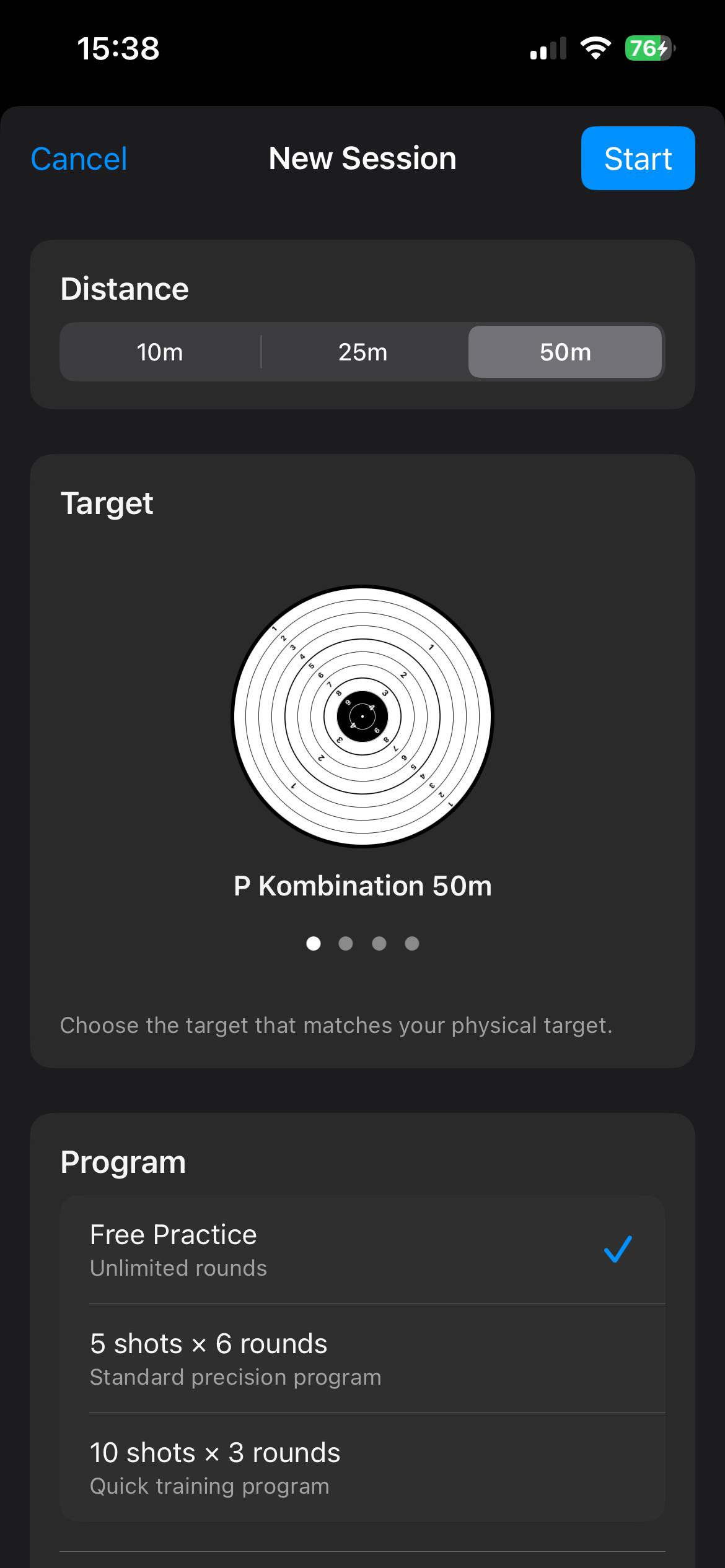
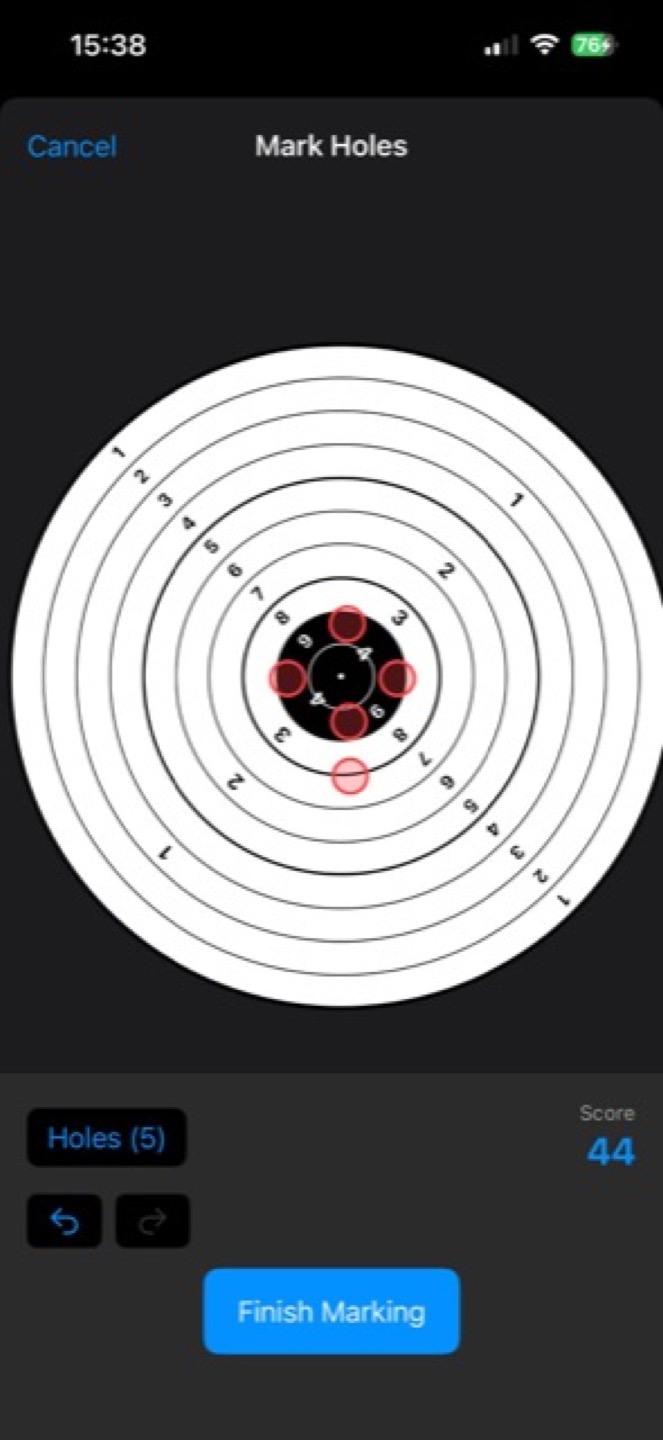
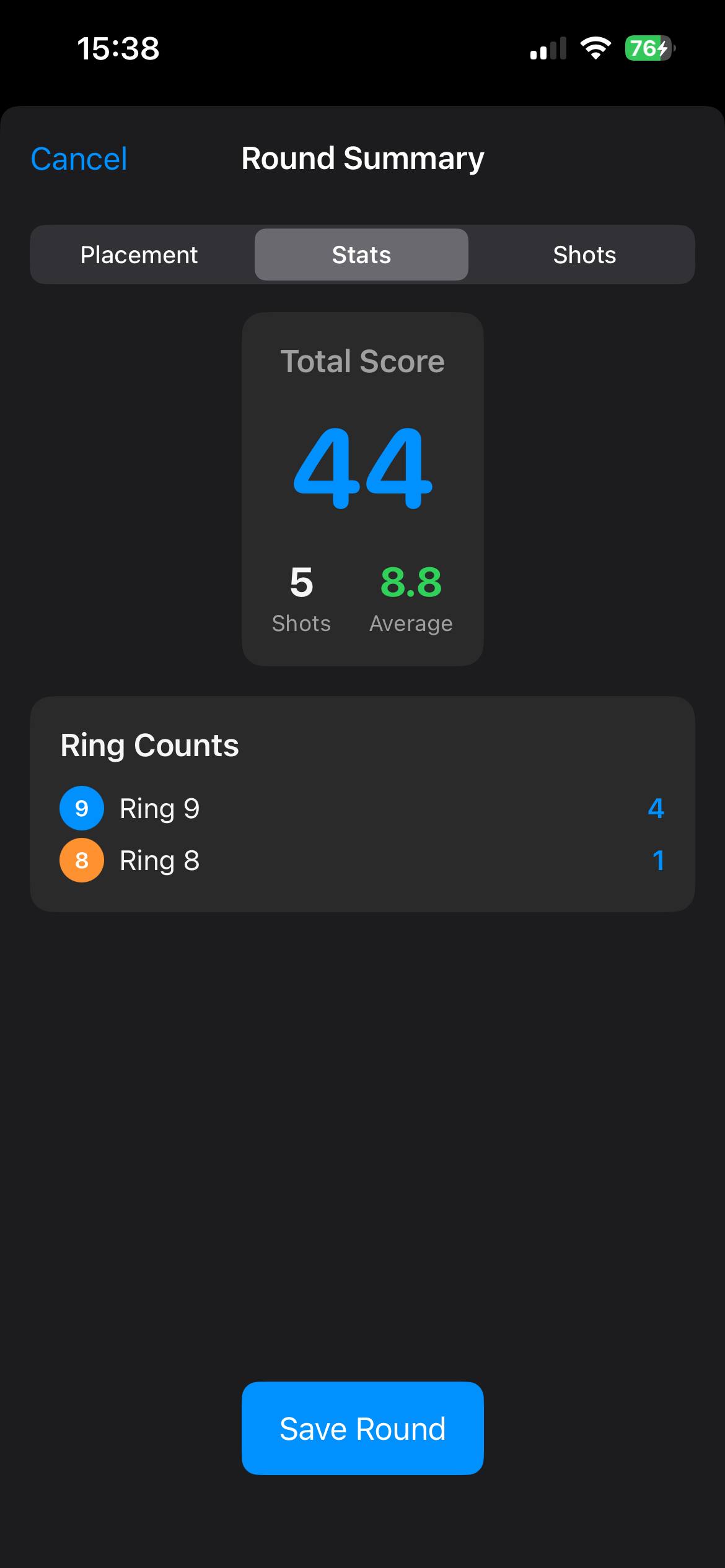
- In the app: choose 10 m, then the Air Pistol 10m target, and tap each hole on the on-screen target. You can drag a hole to correct it and pinch to zoom for close calls. The app gives the score, ring counts and group measurements.
What to log for each series
Total score and shot count are the baseline. Add the target and distance, the pistol and pellets used, and a one-line note about what you were working on. With those fields, you can compare like with like later, and see whether the fade in your last series is a pattern. SportShooting remembers your last gun and ammunition per target. For a longer checklist, see the air pistol training log guide.
Beyond the total: how tight is the group?
Two series with the same score can look very different. One is tight but off-centre, the other is wide but centred. The first needs a sight adjustment, the second needs a steadier hold. The app reports extreme spread, mean radius and group centre for each round. Shot group analysis explains how to read them.
Score your 10m air pistol targets on iPhone
Mark holes on the ISSF target, get ring counts and group stats, and keep a session history. No account needed.
Download on the App StoreFrequently asked questions
How big is the 10 ring on a 10m air pistol target?
The 10 ring has a diameter of 11.5 mm. Each following ring adds 16 mm to the diameter, so the 1 ring is 155.5 mm across.
How is a shot that touches a ring line scored?
A shot counts for the higher ring if the edge of the hole touches the line. SportShooting applies the same rule: it subtracts the hole radius from the shot's distance to the centre before choosing the ring.
Is 10m air pistol an Olympic sport?
Yes. 10m air pistol is contested by men and women at the Olympic Games, and a mixed team event has been added since Tokyo 2020. Qualification is 60 shots in 75 minutes, and the best eight shooters advance to a 24-shot final.
What is a good score in 10m air pistol?
Over 60 shots (maximum 600), around 480 is a typical newcomer result, 540 is a solid club score, and 580 or more is international level. The qualification world records are in the 590s for men and 587 for women. These are rules of thumb, and they vary with age, category and competition.
How many shots are fired in a 10m air pistol match?
In an ISSF qualification round you fire 60 shots in 75 minutes, after 15 minutes of preparation and sighting. The eight best go on to a final of 24 shots, scored in tenths.
Is 10m air pistol shot with one hand or two?
One hand. ISSF rules require the pistol to be held and fired with one hand, with no support from the other hand or the body. Two-handed grips are used in other pistol sports and generally feel steadier, so two-handed scores should not be compared with one-handed benchmarks.
What pellet is used in 10m air pistol?
A 4.5 mm (.177 calibre) diabolo pellet. Match pellets have a flat head (wadcutter) that punches a clean round hole, which is why a 4.5 mm gauge is used to judge close shots.
Does SportShooting score decimals or inner tens?
No. The app scores whole rings from 1 to 10. It does not record tenths (such as 10.4) or an inner-ten count. That matches how ISSF qualification rounds are scored; only finals use tenths.
Can I score my 10m air pistol target from a photo automatically?
Not yet. You tap each hole on a drawn replica of the target. A reference photo can be taken and kept with the round, but the app does not detect holes automatically.
Related: digital shooting logbook vs paper, 25m precision pistol target, and all guides.